








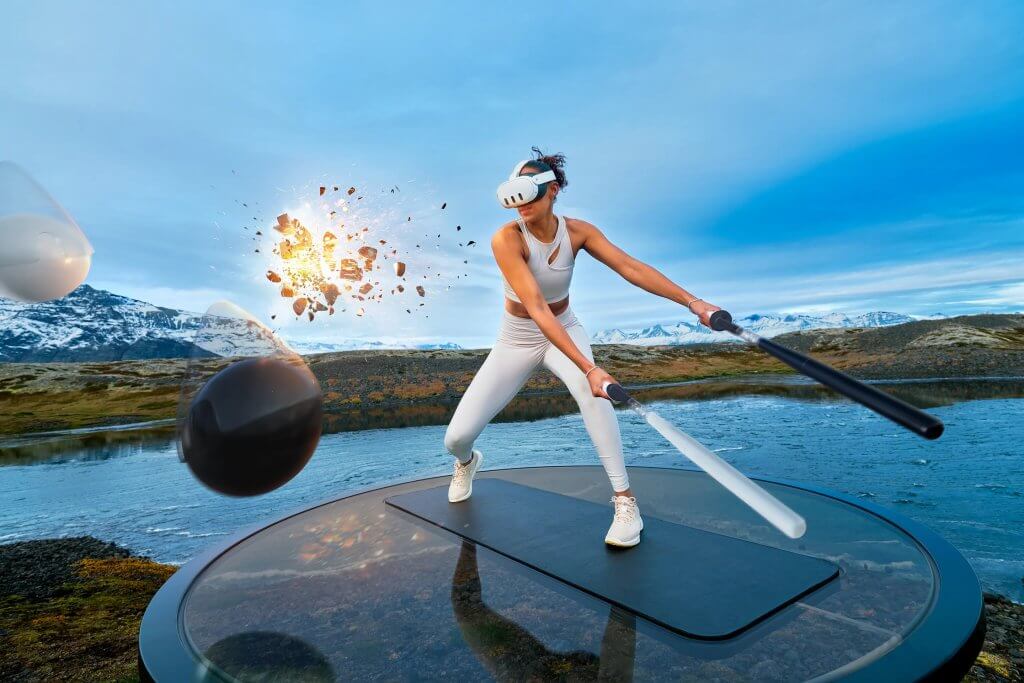
Virtual reality has come a long way from bulky headsets and simple gaming experiences. In 2026, VR is increasingly becoming part of a much broader world of extended reality (XR), spatial computing, artificial intelligence, and smart glasses. Industry data shows that attention is shifting beyond traditional headsets toward lighter devices and AI powered experiences.
So, where could virtual reality go next?
VR Is Becoming More Than Gaming
Gaming remains one of VR’s biggest applications, but immersive technology is expanding into education, healthcare, workplace training, design, retail, entertainment, and industrial applications. Businesses are increasingly using immersive technology to simulate environments, train employees, visualize products, and collaborate remotely. Unity’s 2026 industry report highlights the movement from experimental XR projects toward real world deployments across industries.
Explore the latest VR technology and immersive experiences.
AI Could Make Virtual Worlds Smarter
One of the biggest changes ahead is the combination of AI and VR. Instead of interacting with fixed virtual environments, future VR experiences could become more responsive and personalized. AI can help generate content, understand user behavior, recognize objects, create virtual characters, and adapt environments in real time. Recent research also identifies AI as an important technology for perception, content generation, personalization, and interaction inside immersive environments. Imagine entering a virtual environment that changes depending on what you’re trying to learn, create, or accomplish.
Discover where AI powered VR is heading.
Mixed Reality Could Blur the Line Between Digital and Physical
The future may not be about completely escaping reality. Mixed reality combines digital elements with the physical environment around you. Instead of leaving your living room, for example, you could see virtual screens, instructions, characters, or 3D objects integrated into the space around you. This shift toward spatial computing is already visible in current devices, where eye tracking, hand tracking, environmental awareness, and spatial interfaces are becoming important features.
Experience the next generation of spatial computing.
Smart Glasses Could Become More Important
Interestingly, the future of immersive technology may involve less hardware on your face, not more. Industry data suggests smart AR glasses are becoming one of the fastest growing parts of XR, with IDC forecasting optical see through display glasses to grow substantially through 2030. Lightweight glasses could eventually provide navigation, information, AI assistance, communication, and digital overlays without completely blocking your view of the real world.
Explore the latest smart glasses and wearable tech.
Virtual Workspaces Could Become More Natural
Remote work could also benefit from better spatial computing. Instead of communicating through flat video call windows, future systems could allow teams to meet inside shared 3D environments. Designers could examine virtual products together, engineers could collaborate around digital models, and employees could create personalized virtual workspaces. However, widespread business adoption still faces challenges. Forrester notes that XR’s benefits for many organizations are likely to take years to fully materialize, particularly because consumer adoption remains limited.
Discover immersive tools for the future of work.
Final Thoughts
The future of virtual reality probably won’t be one giant virtual world replacing everyday life. Instead, VR, AR, AI, smart glasses, and spatial computing are likely to blend into a broader computing ecosystem. The biggest change may be that digital information stops living primarily inside screens. It could increasingly appear around us, respond to us, and understand the environment we’re in. VR isn’t disappearing. It’s evolving.
Ready for the future of immersive technology? Explore the latest VR, AR, and XR innovations today.